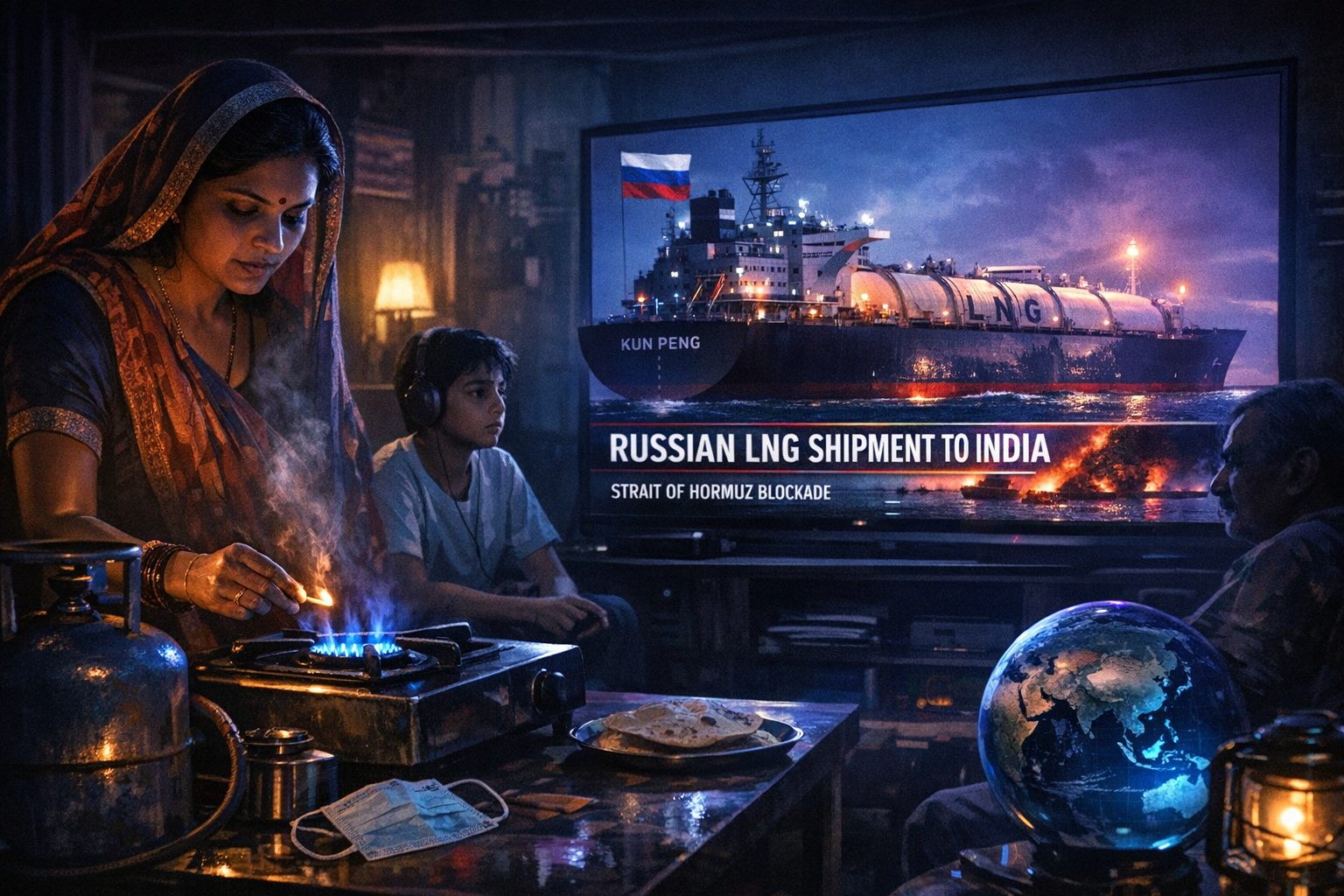
The Narendra Modi government has secured liquefied natural gas imports from Russia to ease India's LPG shortage, triggered by Iran's blockade of the Strait of Hormuz. A Russian tanker, the Kun peng, carries this cargo from the sanctioned Portovaya plant on the Baltic Sea and heads to the Dahej terminal on India's west coast. This step addresses immediate domestic needs but risks straining relations with the United States.
Blockade Sparks Acute Shortage
Iran's unofficial closure of the Strait of Hormuz since late February has slashed maritime traffic by 95 percent, choking one-fifth of global energy flows. India depends on this waterway for about 2.5 to 2.7 million barrels per day of crude oil imports—nearly half its total—sourced mainly from Iraq, Saudi Arabia, the UAE, and Kuwait. The resulting global energy crunch hits import-reliant nations like India hardest, disrupting LPG supplies essential for millions of households.
Russian Shipment Defies US Sanctions
The Kun peng shipment represents Russia's first direct LNG delivery to India since US President Donald Trump claimed last year that Prime Minister Narendra Modi pledged to halt Russian energy purchases. New Delhi has never confirmed such an assurance, insisting its import choices follow market demands and consumer priorities. Russia's Portovaya facility falls under US sanctions, which target efforts to curb Moscow's energy revenues, yet India prioritizes supply stability over external pressures.
Balancing Energy Security and Diplomacy
This import decision underscores India's challenge in securing affordable energy amid geopolitical tensions. While the West Asia conflict elevates costs and risks for traditional Middle East suppliers, turning to Russia fills a critical gap without long-term commitments. Washington may view the move as a setback in its sanctions campaign, potentially complicating bilateral ties, though India maintains sovereignty over its energy sourcing to protect domestic users from shortages and price spikes.